Can You Get in Trouble for Posting Memes? A Simple Guide to Meme Copyright
Memes are everywhere, and almost all of them borrow something: a movie scene, a celebrity's face, a photo someone took years ago. So it's natural to wonder: can you actually get in trouble for posting memes?
The short answer: for most people sharing memes for fun, problems are rare. But the risk isn't zero, and it goes up when a business uses memes in its marketing. This guide explains the basics in plain English. It's general information, not legal advice. If you have a specific concern, talk to a lawyer.
Memes and copyright: the basics
In the United States and many other countries, a photo, drawing, movie frame or illustration is usually protected by copyright as soon as it's created. The copyright owner, often the photographer, artist or studio, controls how it's copied and shared.
When you put text on top of someone else's image, the original image is still theirs. Adding a caption doesn't make it yours.
What about fair use?
US copyright law includes "fair use," which allows some uses of copyrighted material without permission, for example for commentary, criticism, news reporting or parody. Many memes arguably fit here, because they comment on or transform the original.
But fair use isn't automatic. Courts look at several factors, including:
- The purpose of the use: is it transformative, commentary or parody, or is it commercial?
- The nature of the original work.
- How much of the original was used.
- The effect on the market for the original, such as whether your use replaces a licensed one.
Because it's decided case by case, nobody can promise that a particular meme is fair use.
When memes are more likely to cause trouble
Using memes to sell things
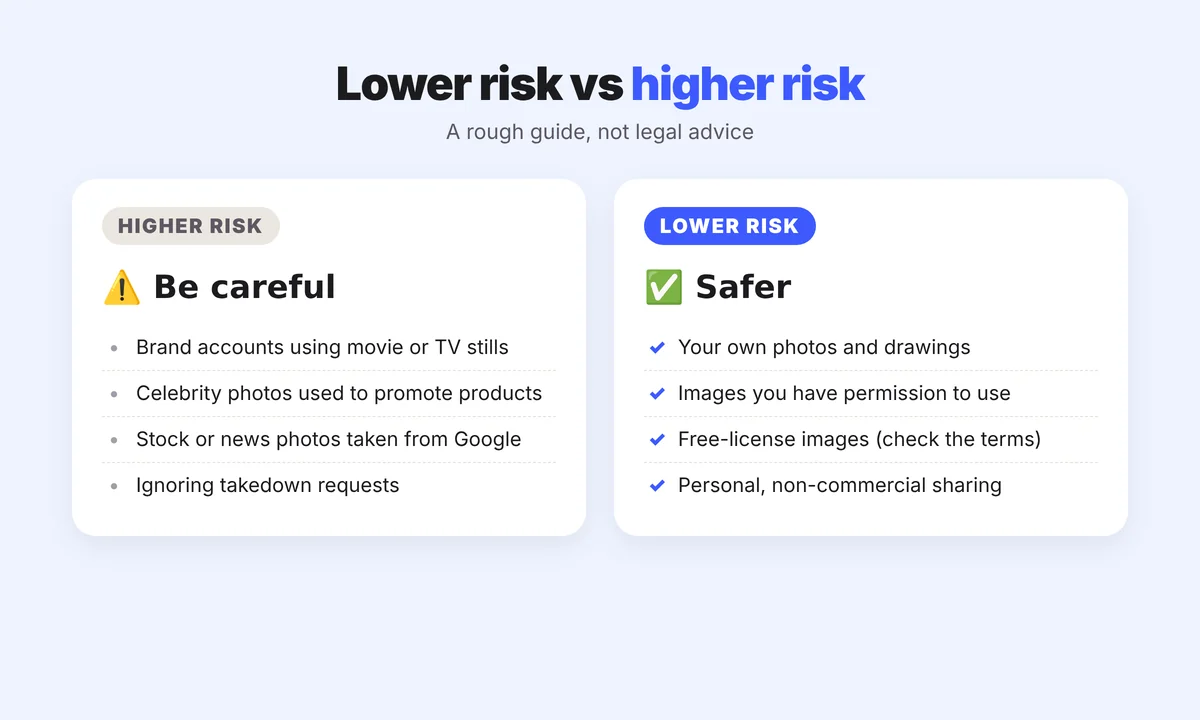
Commercial use raises the stakes. A brand posting a popular movie still with its logo, or using a famous photo in an ad, is more likely to get a complaint than a person sharing it with friends. There have been cases where photographers and the people featured in famous meme images took action against companies that used them in marketing without permission.
Using real people's faces
Separate from copyright, many US states recognize a "right of publicity," which protects people from having their name or likeness used to promote products without permission. A celebrity photo suggesting they endorse your product can be a problem even if you have rights to the photo itself.
Ignoring takedown requests
Social networks respond to copyright complaints by removing content, and repeated complaints can lead to account restrictions. If a rights holder asks you to remove an image, it's usually wise to do it quickly.
How to make memes with less risk
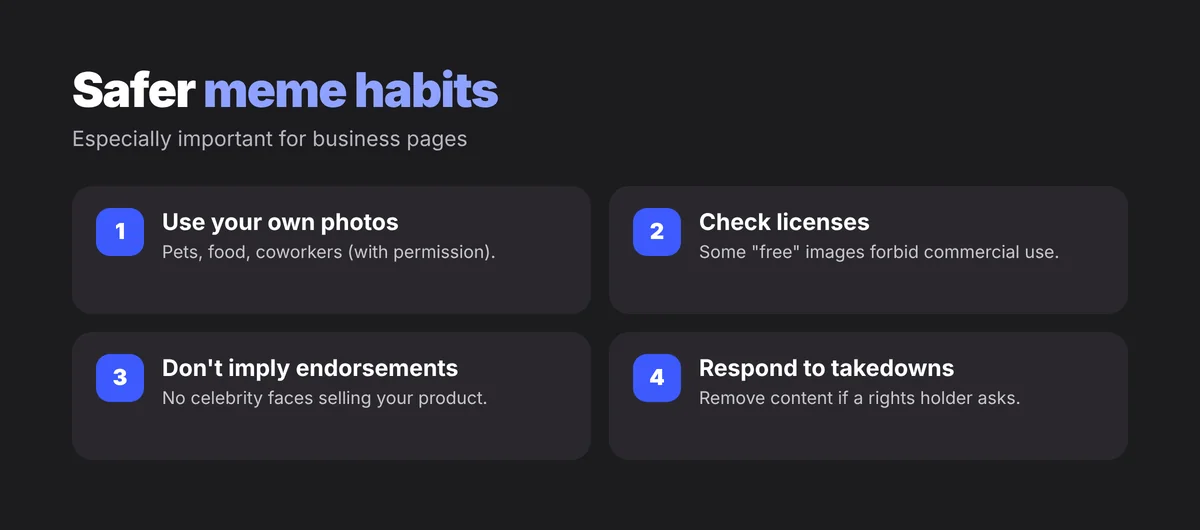
- Use your own photos. Your pet, your lunch, your messy desk. You own them, and they make memes feel personal. Upload them to our free meme generator and add your captions.
- Get permission before using photos of other people, especially for a business page.
- Read license terms. Some stock and "free" images allow commercial use, while others don't, or require credit. Check before you post.
- Start from a blank background. Text-only memes on a solid color can be just as funny and carry no image rights issues. Our meme generator lets you start with a blank canvas.
- Don't imply endorsements. Avoid using real people's faces in a way that suggests they support your product.
- Keep records. Save where you got an image and its license, in case anyone asks.
Personal vs business use
For personal accounts, sharing memes is part of everyday internet culture, and serious problems are uncommon. For business accounts, it's smart to be more careful and stick to original images or properly licensed ones. Read our guide on how small businesses can use memes for ideas that don't rely on borrowed images.
Frequently asked questions
Is sharing a meme someone else made okay?
Using a platform's built-in share or repost feature is generally how content is meant to travel. Downloading someone's meme and reposting it as your own is a different story, so give credit where possible.
Does giving credit make it legal?
Credit is polite and helpful, but it doesn't replace permission when permission is needed.
Are memes from a meme generator safe?
The tool itself doesn't change copyright. What matters is the image you put in. Using your own photos is the safest route.